
Guide
Meteorite collection software: a guide for collectors
Spreadsheets were never designed for meteorites. A serious meteorite catalogue needs fields for classification, TKW, strewnfield coordinates, fall data and provenance — all linked, searchable and shareable.
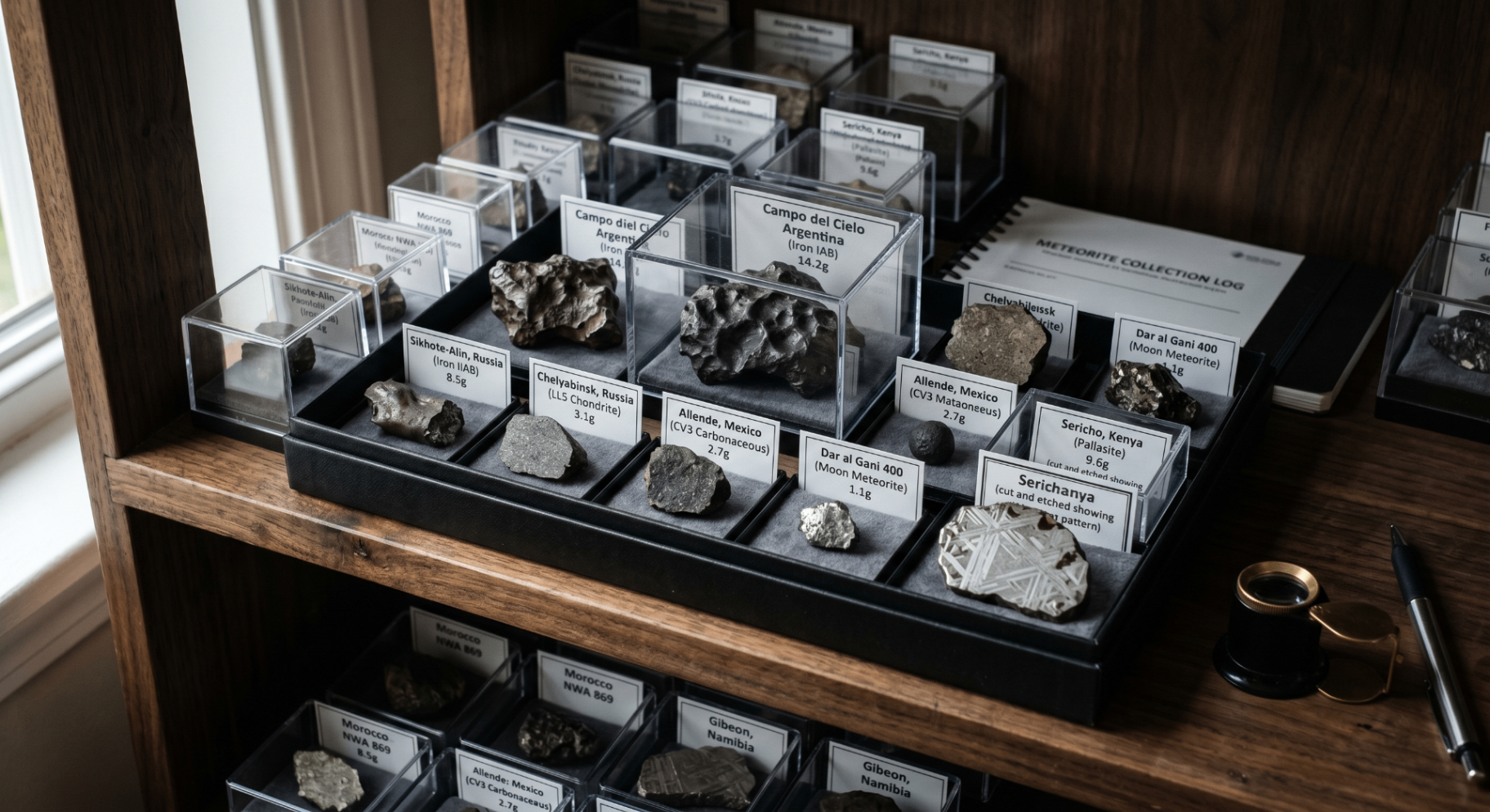
Built for meteoritics
The fields a meteorite collector actually needs
Museumica treats meteorites as first-class specimens. Every record can carry the scientific and curatorial data that matters to serious collectors.
Classification
Record group and type — chondrite (H, L, LL, CV, CM, CO, CK, R, EH, EL), achondrite, iron (IAB, IIAB, IIIAB), pallasite, mesosiderite or lunar/martian. Sort and filter by class across the whole collection.
Strewnfield & coordinates
Capture the official strewnfield name, country, find or fall date, and GPS coordinates. Every locality plots on an interactive map alongside the rest of your collection.
TKW, mass & dimensions
Track total known weight, specimen mass, end-cut versus full slice, dimensions and density — all in dedicated fields rather than a single freeform cell.
Fall vs. find & witness data
Mark fall or find, attach witness accounts, fireball reports, MetBull entries and Nomenclature Committee status. Provenance notes attach to the specimen, not a scattered folder.
Accession & valuation
Acquisition date, dealer, price, insurance value and prior owners stay private. Public museum pages hide financial data automatically.
AI-assisted descriptions
Generate museum-quality descriptions from your real metadata — classification, locality, mass, structure — without inventing data the specimen does not have.
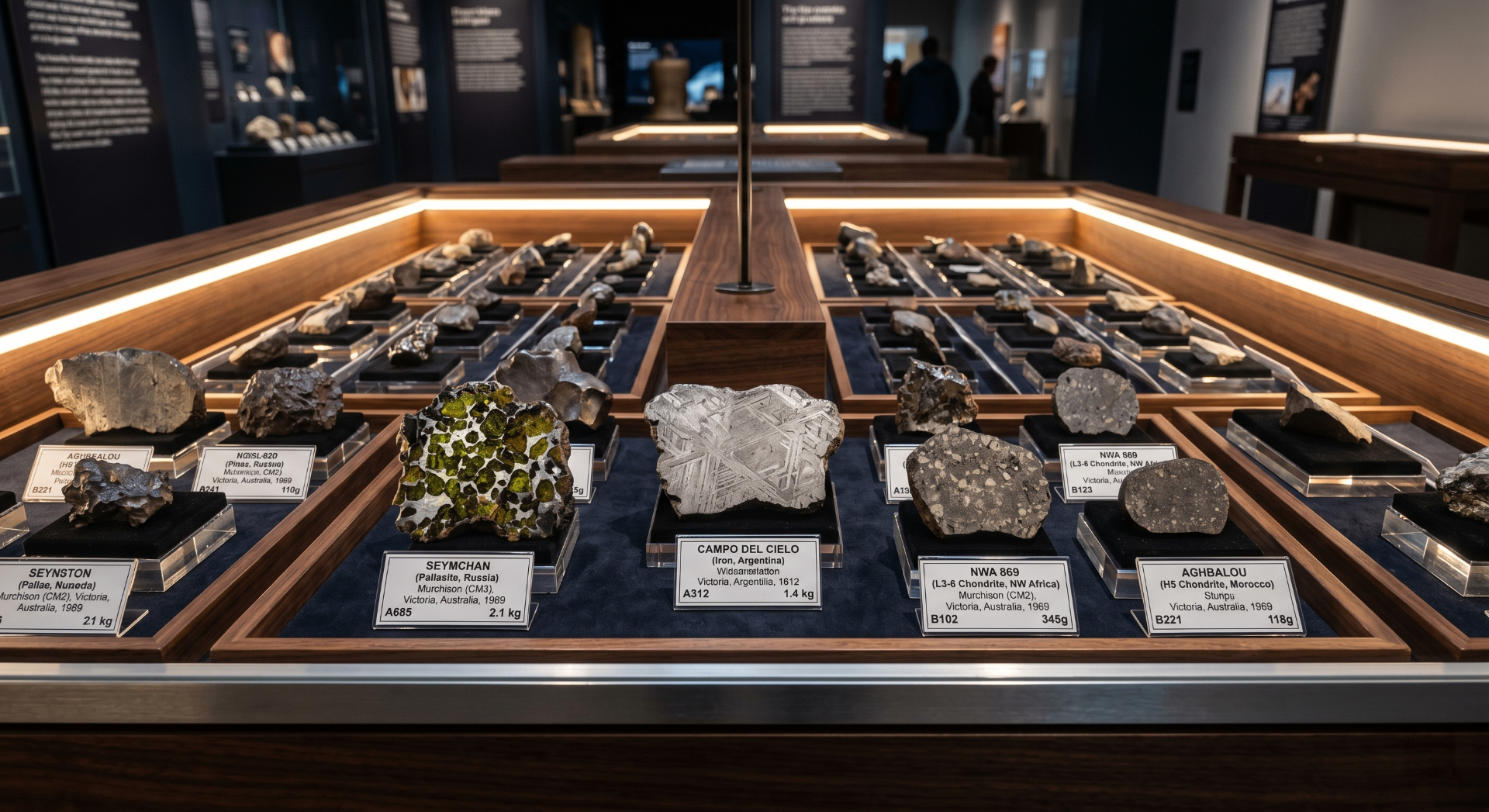
Spreadsheets vs. Museumica
Why generic spreadsheets fall short
- Classification, structure and shock stage get crammed into a single 'notes' column.
- Photos of cut faces, Widmanstätten etchings and fusion crust live in disconnected folders.
- Strewnfield coordinates never reach a map — gaps in your geographic coverage stay invisible.
- Sharing a spreadsheet exposes dealer prices and insurance valuations to everyone you send it to.
- There is no public museum view to share your collection with fellow collectors or institutions.
What you get
A real meteorite collection manager
From a single iron in a display box to a research-grade cabinet of chondrites, achondrites and lunar samples — Museumica scales with your collection.
Everything in one place
- Structured fields validated for meteorite classification.
- Unlimited photos per specimen — exterior, cut face, etched slice.
- Interactive world map of strewnfields and find sites.
- Museum-quality labels with classification, TKW and accession number.
- A public museum page you control — private notes stay hidden.
- CSV and PDF export whenever you want your data back.
Exhibition-ready
From cabinet to public museum
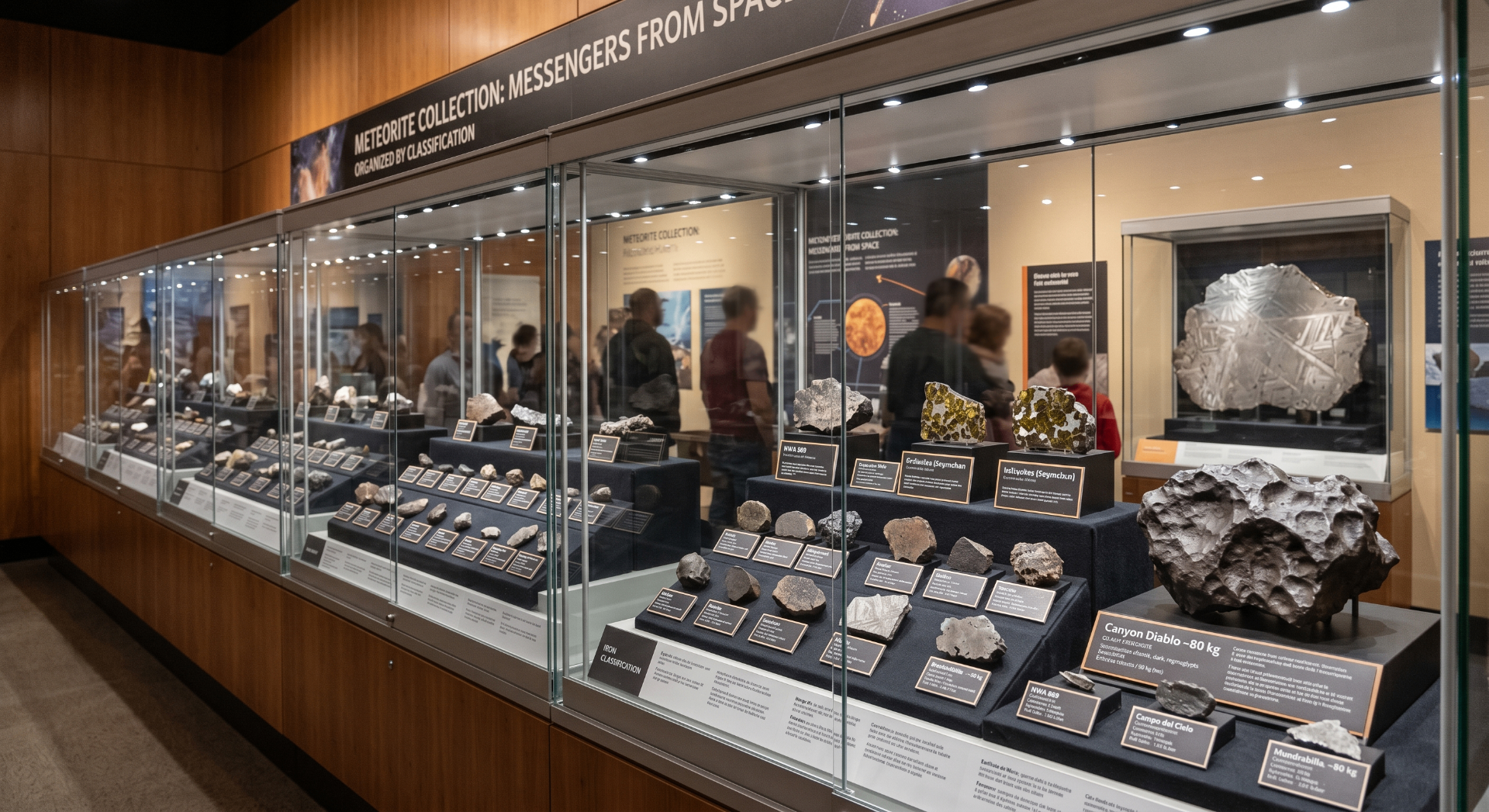
Group meteorites into curated exhibitions — by classification, parent body or strewnfield — and publish them at your own museum URL.
Getting started
How to move your meteorite collection into Museumica
- 01
Create a free workspace
Sign up and claim your personal URL at www.museumica.com/your-name.
- 02
Add your first meteorite
Fill in classification, strewnfield, TKW, mass, photos and provenance. Or import a CSV if you already have a spreadsheet.
- 03
Organise and publish
Group meteorites into collections, print labels, and optionally publish a public museum for visitors.
FAQ
Common questions
- Can I import my existing meteorite spreadsheet?
- Yes. Museumica supports CSV import and maps common columns like name, classification, TKW, mass and locality into the right fields.
- Is there a free plan?
- The Hobby plan is free for personal collections and includes all core meteorite cataloguing fields.
- Can I keep my collection private?
- Absolutely. All specimens are private by default. You choose which collections or exhibitions to publish.
- Does it handle lunar and martian samples?
- Yes. Achondrite subgroups including lunar and martian classifications are fully supported, with dedicated fields for pairing groups and Meteoritical Bulletin references.
Ready to catalogue your meteorites properly?
Join collectors who have moved from brittle spreadsheets to a real meteorite collection manager.
Start free — no credit card required