From the first acquisition note to the published exhibition, Museumica handles every step of natural history collection work.
Features at a glance+
What it is: A web-based natural history collection management system for cataloguing specimens, managing storage, printing labels and publishing a public museum.
Who it is for: Private collectors, small museums, historical societies and researchers.
What it costs: Free Hobby plan; paid Advanced Collector plan; custom Museum / Institution plan.
What is free: The Hobby plan includes core cataloguing for up to 50 specimens and 3 collections. AI tools require a paid plan.
Import and export: Import from CSV and XLSX; export to CSV, PDF catalogue and Darwin Core.
Where data is hosted: In the European Union, GDPR compliant.
Launched: 2025.
Specimens
A flexible catalogue for minerals, fossils, shells, insects, meteorites, herbarium sheets, taxidermy and curiosities. Each category brings its own scientific fields — Mohs hardness, geological period, locality, collector, accession number — so every record is complete and audit-ready.
Storage
Reconstruct your physical cabinet digitally with rooms, cabinets, drawers, boxes and positions. Move specimens between locations, track loans, and find any object in seconds — even across thousands of records.
Labels
Generate museum-quality labels in classic, scientific, cabinet and QR-coded styles. Batch-print onto Avery sheets or export PDFs ready for the printer, with typography tuned for archival display.
Exhibitions
Curate virtual exhibitions with sections, narratives, hand-picked specimens and cover art. Publish to a shareable URL or keep them private as planning tools for physical shows.
Public museum
Publish your collection at www.museumica.com/your-name. Visitors browse a curated, public-facing version of your cabinet while private valuations, addresses and notes stay hidden.
Geographic map
See every specimen plotted on an interactive world map by collection locality. Filter by category, country, era or collector to spot gaps and stories in your holdings at a glance.
Reports
Run inventory, insurance valuation, acquisition history and missing-data reports. Export to CSV or PDF in seconds — ready for accountants, insurers or institutional audits.
Collections
Group specimens into curated collections by theme, project or exhibition. Add, remove and reorder records within a collection, then share the set with collaborators or use it as the starting point for labels and exports.
Exports
Export any selection of specimens in CSV, PDF catalogue or Darwin Core format. Darwin Core is the biodiversity conservation standard used by museums and research institutions worldwide — your data stays portable and interoperable.
Collaboration
Invite curators, conservators and researchers into your workspace with role-based permissions. Track who added, edited or relocated each specimen with a full activity log.
Built-in AI
An AI curator working alongside you.
Museumica is built around a dedicated AI layer — not a chatbot bolted on, but tools that read your collection, write with your data and surface what you'd otherwise miss. The AI tools below are included on paid plans.
AI Assistant
A threaded chat assistant that knows your collection. Ask about recent acquisitions, gaps by category, what a specimen is, or how to phrase an exhibition wall text — every conversation is saved and searchable.
Specimen descriptions
Generate editorial, museum-quality descriptions from a specimen's metadata in one click. The model uses your facts — species, locality, period, dimensions — so you never invent provenance, only polished prose.
Semantic search
Search by meaning, not just keywords. Type "iridescent Devonian fossil from Morocco" and Museumica finds the right records even when those exact words aren't in the catalogue, powered by vector embeddings.
Exhibition narratives
Turn a list of chosen specimens into a three-paragraph exhibition story with one click. The AI synthesises themes, geographies and time periods across your selection — a curator's first draft, in seconds.
Museumica vs spreadsheets
Where a spreadsheet stops being enough for a growing collection.
Museumica compared with spreadsheets
Aspect
Museumica
Spreadsheet
Specimen fields
Category-specific scientific fields with validation
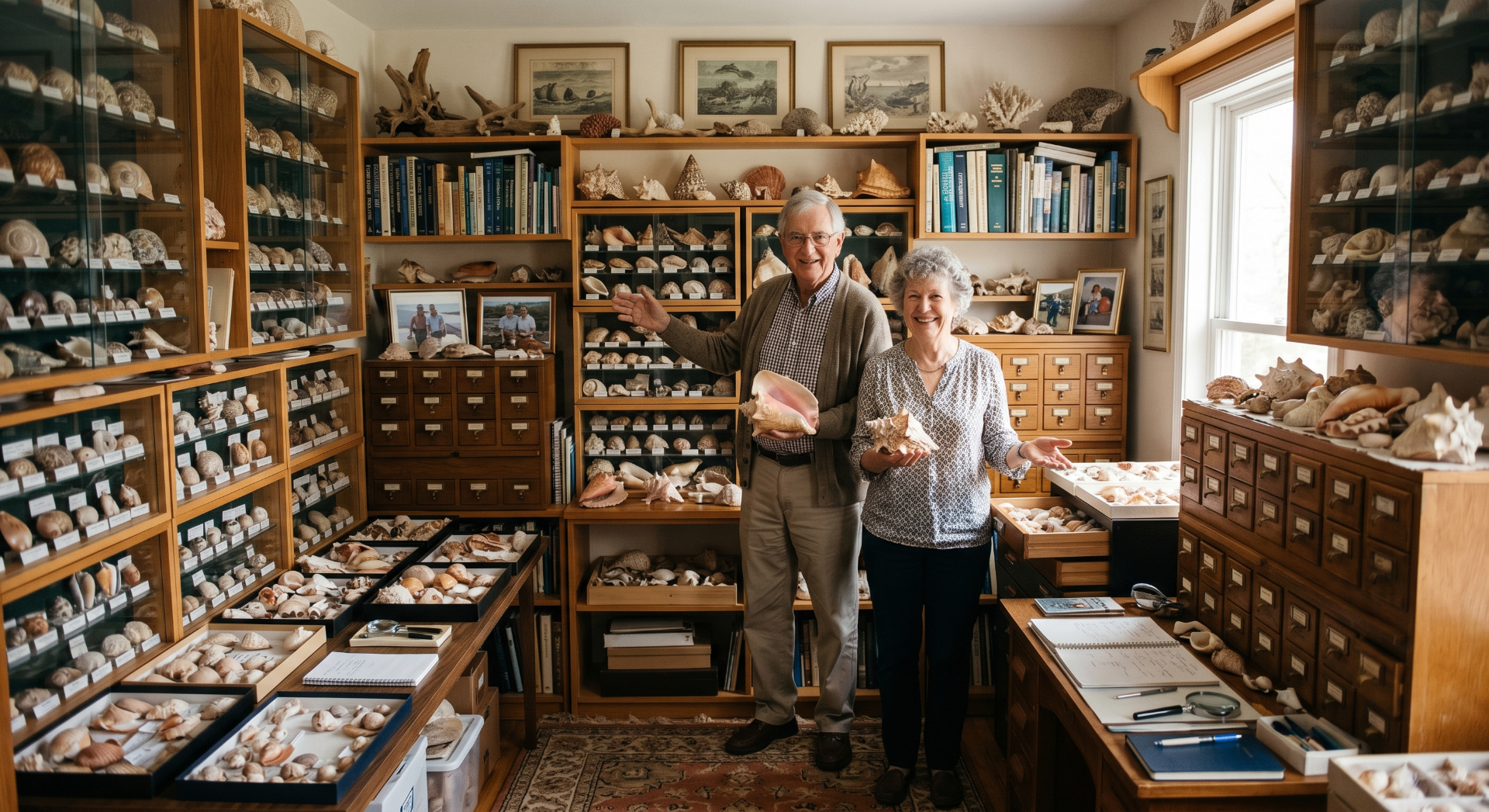
"Fifty years of beachcombing and shell shows, and finally we have a catalogue that respects the beauty of what we have gathered. Every Conus, every Murex, every little cowrie is exactly where it should be."
Geoffrey & Margaret Pembroke
Private shell collection
Cornwall, United Kingdom
Geoffrey & Margaret Pembroke — Private shell collection — Cornwall, United Kingdom
Anders Nyström — Mineral collector — Örebro, Sweden
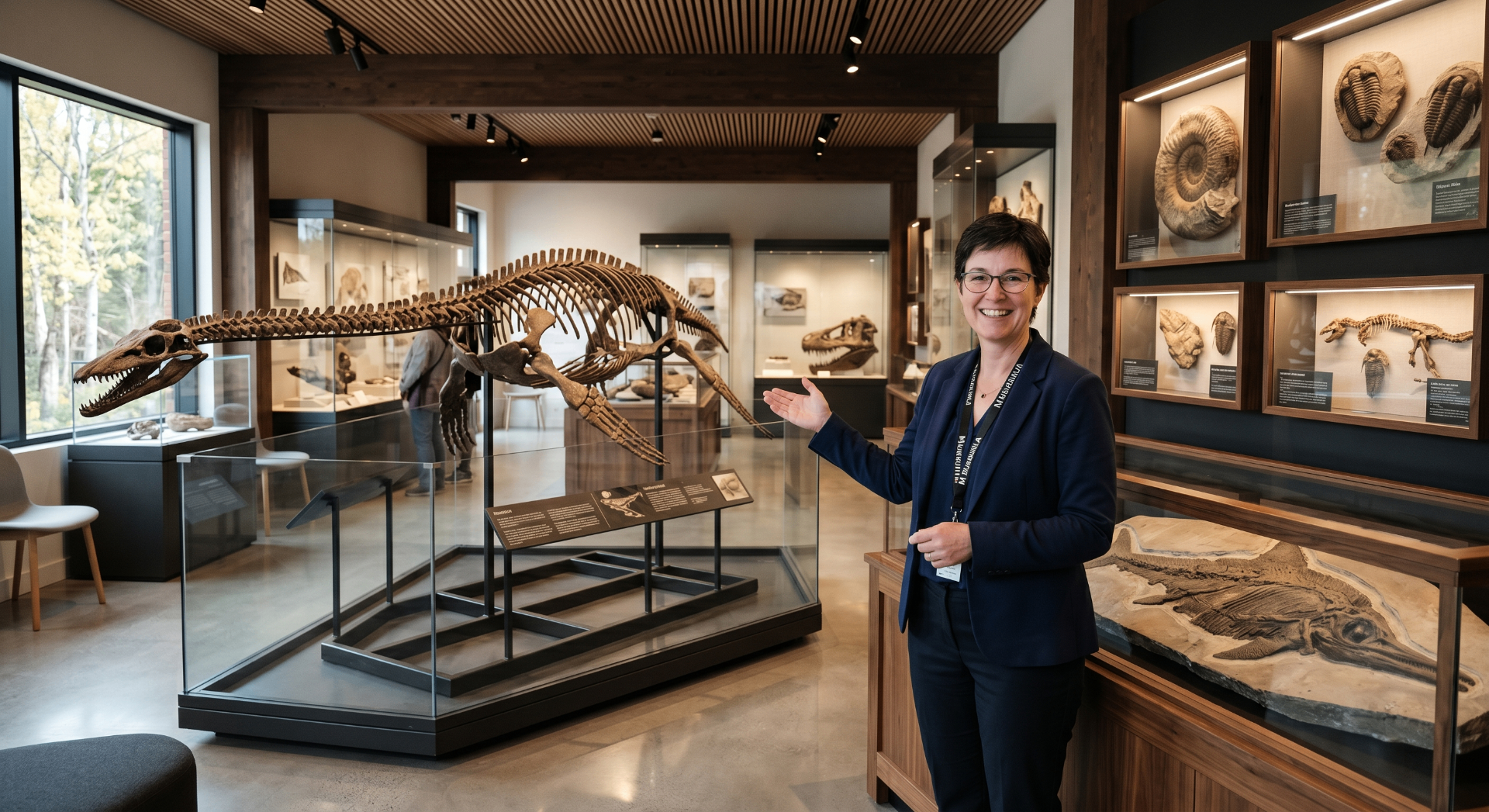
Dr. Helena Vorster — Director, Naturmuseum Solnhofen — Solnhofen, Germany